
Atlas partners

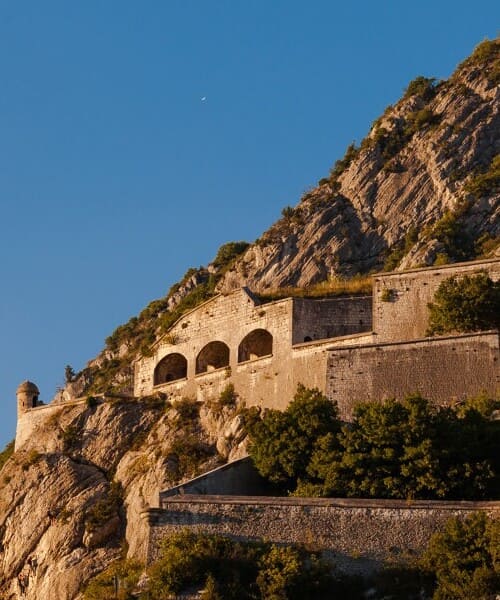
Atlas project is funded by ANR CCH 2023 (Belmont funding with Universidad Pablo de Olavide and Ca’ Foscari University of Venice) for around 845k€ (300k€ UGA). The project runs from May 2024 to May 2027. Climate change (CC) is triggering dangerous temperature increases, floods, droughts, and fires in historic cities and their environments, which affect citizens’ and cultural heritage (CH) health. ATLAS employs interdisciplinary approaches and digital technologies for 1) modelling the scenarios of CC risks in Historic Cities, 2) managing Immovable CH and Green Infrastructure and, 3) predicting potential impacts. ATLAS tools based on satellite imagery, Geographic Information Systems, opinion of citizen managers, and human behaviour computational simulations, allow us to assess CC risk and look for the best resilience solution. UGA designs and implements an agent-based simulator to assess coordinated response strategies in the case of a forest fire in the area of Grenoble (specifically the area around the highly wooded area of the Bastille, a popular tourist attraction that is an ancient fort and cultural landmark, including several important museums.)
At UGA, we work on designing and implementing an agent-based simulator to assess coordinated response strategies in the case of a forest fire in the area of Grenoble (specifically the area around the highly wooded area of the Bastille, a popular tourist attraction that is an ancient fort and cultural landmark, including several important museums.). A particular focus in the modelling is given to modelling human behaviour of citizens in the area as well as the communication and response strategies of the emergency decision-makers. This will involve meeting with stakeholders (elected personnel, Grenoble Metropole, first responders) organised by our research project partner PARN (Pôle Alpin Risques Naturels – a Public Organization for mitigation of risk in natural environments). The goal is to uncover the current protocols, procedures and evacuation plans, establish which communication actions between agencies are used to coordinate a response, and to assess what behaviours the local population would do in the case of a forest fire. These will then be implemented in a simulator in order to test different scenarios (uncontrollable fire, different response strategies, etc.) in order to provide a tool to local decision makers so that they can improve their management of such events. Ultimately the simulator will provide a method to assess the resilience of Grenoble to face forest fires. The work is highly multi-disciplinary since it involves an in-depth knowledge of multi-agent systems, specifically agent-based social simulation, cultural heritage, fire response strategies and basic fire progression models, policy and local governance, and social sciences (e.g. cognitive theories of behaviour).
Atlas Team
Research team
Pilar Ortiz Calderón: Principal Investigator (PI) of the team. Doctor of Chemistry. Professor at the University of Pablo de Olavide.
Julie Dugdale: Partner (PI) of the team. Doctor of Computer Science. Professor at the University of Grenoble Alpes (UGA).
Edy Fantinato: Partner (PI) of the team. Doctor Environmental Science at the University of Ca´Foscari Venezia (UNIVE).
Carole Adam: Doctor of Computer Science. Associate Professor at the University of Grenoble Alpes (UGA).
Rocío Ortiz Calderón: Doctor of Architecture. Professor at the University of Pablo de Olavide.
Víctor Amadeo Bañuls Silvera: Doctor of Business Organisation and Marketing. Professor at the University of Pablo de Olavide.
Inmaculada Chuliá Blanco: Doctor of Restoration-Conservation. Technician at the Institut Valencià de Conservació, Restauració i Investigación of the Generalitat Valenciana.
Francesca Caterina Izzo: Associate Professor in Heritage and Conservation Science at the University of Ca´Foscari Venezia (UNIVE).
Macarena Tejada Tejada: Doctor of Geography and History. Professor at the University of Pablo de Olavide.
Elisabetta Zendri: Doctor Chemistry at the University of Ca´Foscari Venezia (UNIVE).
Work Team Members
Mónica Moreno Falcón: Doctor of History. Professor at the University of Pablo de Olavide.
Laura Toro Murillo: Biologist. Research support technician at the University of Pablo de Olavide.
Fanny Di Tursi: Geographer. Post doc at the LIG, part of the SocSim-k team.
Flavien Loup–Hadamard: Computer scientist. PhD Student at the LIG, part of the SocSim-k team.
Stakeholders
Gemma Contreras Zamorano: Doctor of Art History. Director of the Institut Valencià de Conservació, Restauració i Investigación of the Generalitat Valenciana.
Mario Conte: Mayor of Treviso (Italia).
Julio Maqueda Macías: Head of the Civil Protection Service of the Hon. Ayuntamiento of Antequera.
Carine Peisser: Project Manager. Pôle Alpin Risques Naturels
Partner website
Results
Coming soon