

About us
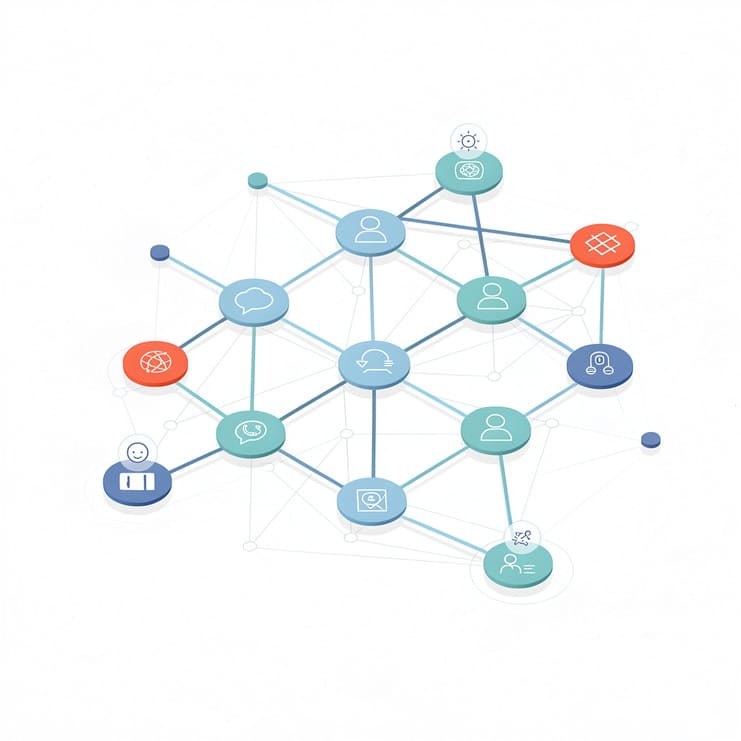
SocSIM-K focuses on understanding human behaviours in complex real-world settings and building computational models of these behaviours, and their reasons behind them for simulation. Typically, we use an agent-based approach, grounding our work in the general area of agent-based social simulation.
Agent-based social simulation is a scientific field dedicated to studying social phenomena through computer-based multi-agent models. In such models, individuals or groups are represented as intelligent autonomous agents whose interactions generate collective social dynamics. We draw heavily on social science theories, as well as empirical data, in order to conceptualise behaviours and people’s interactions with each other and with their environment. SocSIM-K focuses on the design and implementation of agents and their decision-making processes. By placing these artificial agents in simulated societies, we can see how individual actions lead to emergent social patterns. These simulations make it possible to explore scenarios that are difficult, impractical, too costly, dangerous, or unethical to study in the real world.
Keywords: Agent based social simulation, human behaviour modelling, cognitive modelling (including emotions, cognitive biases, social norms, and social attachment), multi-agent systems, knowledge representation, ontologies, semantic web, linked data.
Our research challenges :
Agent Modeling &
Human-like behavior
How can we develop realistic and psychologically plausible agent models that capture the complex drivers of human decision-making and social interaction.
Model Validation &
Empirical Grounding
How can we address the critical challenge of ensuring models are both credible and trustworthy by establishing robust methods for validation and data-driven development.
Technical Implementation &
Scalability
How can we overcome the computational and engineering challenges of building and executing complex, multi-scale agent-based simulations in a practical and consistent manner.
Application domains